

The bacteria that live in the mouth and multiply by feeding on sugary food residue are not only harmful to the teeth. They also attack soft tissues such as the gums, which can become inflamed (gingivitis) or develop a deeper disease (periodontitis). That is why it is important to take care of them and make sure they stay healthy.
The dental professionals at Clinique dentaire Saint-Étienne offer gum care to prevent and treat infections of these essential tissues.
The gum: a sensitive tissue
The gum is part of the periodontium, the set of tissues that holds the teeth in place. It is the outer part of this structure, which also includes the cementum (the rough coating of the tooth roots), the periodontal ligament (the tissue connecting the root to the bone) and the alveolar bone (in which the teeth sit). Because it is on the outside, the gum is exposed to bacteria, mainly those in plaque and tartar, deposits that often build up at the base of the teeth. The acids released by these microbes can then inflame the gums (gingivitis), or even cause a deeper disease (periodontitis).

Gingivitis and periodontitis: two diseases to avoid
Gingivitis:
an inflammation of the gums. It shows up mainly as light to moderate bleeding when brushing or flossing. When caught in time, a professional cleaning with thorough scaling is usually enough to stop it. In some cases, antibiotics may also be prescribed.
Periodontitis:
it often follows untreated gingivitis. By then, bacteria have gone below the gum and periodontal pockets (gum separation caused by bacterial build-up) form. It also causes heavier bleeding, redness and swelling, chronic bad breath and sometimes headaches and fever. Gingivitis can also cause gum recession.
Gum care at the clinic
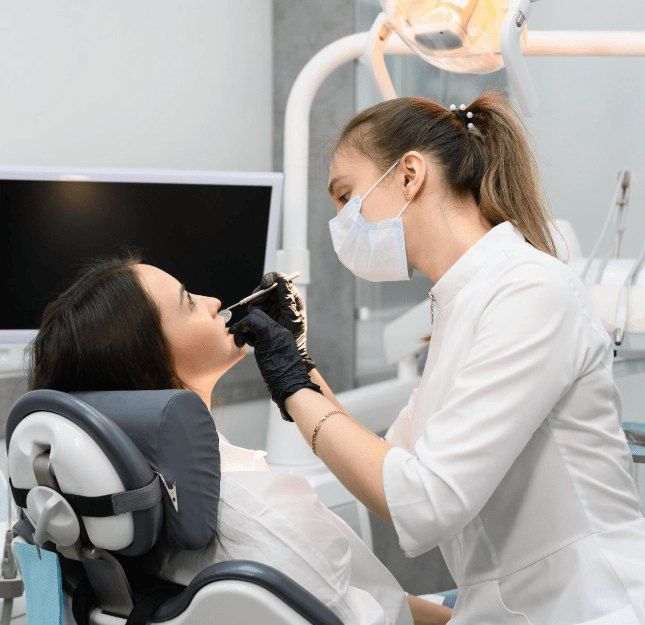
Preventing and treating gingivitis. During the routine exam, the dentist checks the condition of your gums. If they are inflamed, thorough scaling will probably be done. This step, part of the cleaning, also helps prevent gingivitis. If you tend to build up tartar, more frequent visits may be suggested.
Treating periodontitis. Periodontitis is treated with root planing (closed curettage), a non-surgical treatment done under local anesthesia. It removes the tartar that has built up under the gums to eliminate the periodontal pockets. The gum then regains its normal appearance and function.
Surgical treatment of periodontitis and its effects. In more severe cases, or when root planing was not enough, open curettage is needed. A gum graft may be prescribed if the disease has caused gum recession. When the bone is damaged, reconstructive surgery may also be needed.